
Coming To A City Near You
Atlas Retaining Walls designs and installs engineered segmental retaining wall systems for residential and commercial properties across San Diego, Los Angeles, Orange County, and Pittsburgh. Every system is site-specific – built for your soil type, slope gradient, drainage conditions, and local seismic or freeze-thaw requirements.
Segmental retaining walls use interlocking dry-cast concrete units to create strong, reinforced earth structures without mortar. When properly engineered and installed, they are among the most durable, low-maintenance, and cost-effective solutions available for residential and commercial earth retention.
Atlas specializes in engineered segmental retaining wall systems. For projects involving unstable slopes or erosion concerns, we also offer Slope Stabilization solutions.
Serving: San Diego, Orange County, Los Angeles & Pittsburgh Metro Areas
Segmental Retaining Wall: Engineered segmental block retaining wall systems designed for structural performance, drainage integration, and long-term durability.
Residential & Commercial Solutions: Driveway walls, backyard landscaping, terracing, property leveling, commercial site support, and more.
Free Site Assessment: Receive a site-specific retaining wall and drainage evaluation from our local team.
A segmental retaining wall is a modular earth retention system constructed from interlocking precast concrete blocks. Unlike poured concrete or natural stone walls, segmental block systems are designed to flex slightly with soil movement – making them well-suited to seismically active regions like Southern California and freeze-thaw climates like Western Pennsylvania.
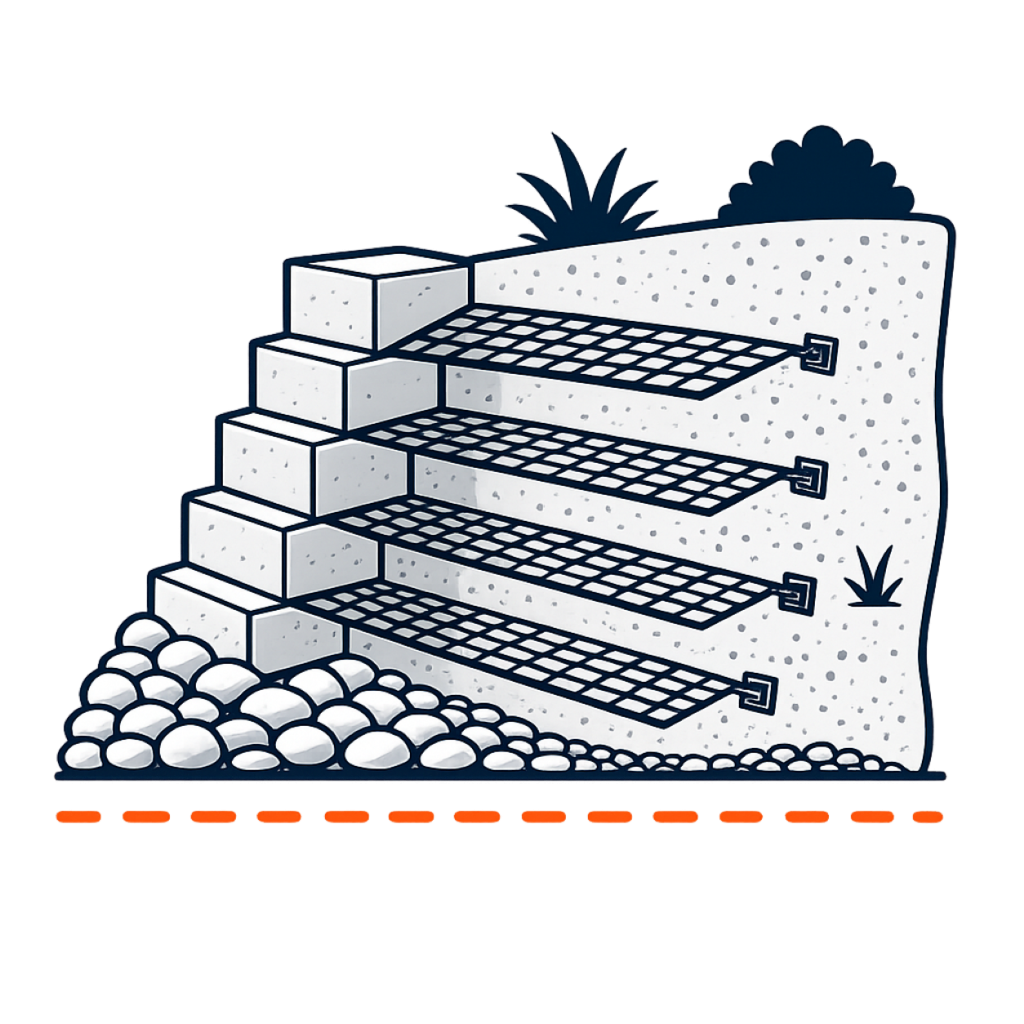
The structural performance of an SRW depends on three engineered components working together: the wall facing units, the compacted granular base, and – for walls exceeding four feet – geogrid reinforcement layers embedded in the retained soil. Atlas engineers each of these variables to your specific site.
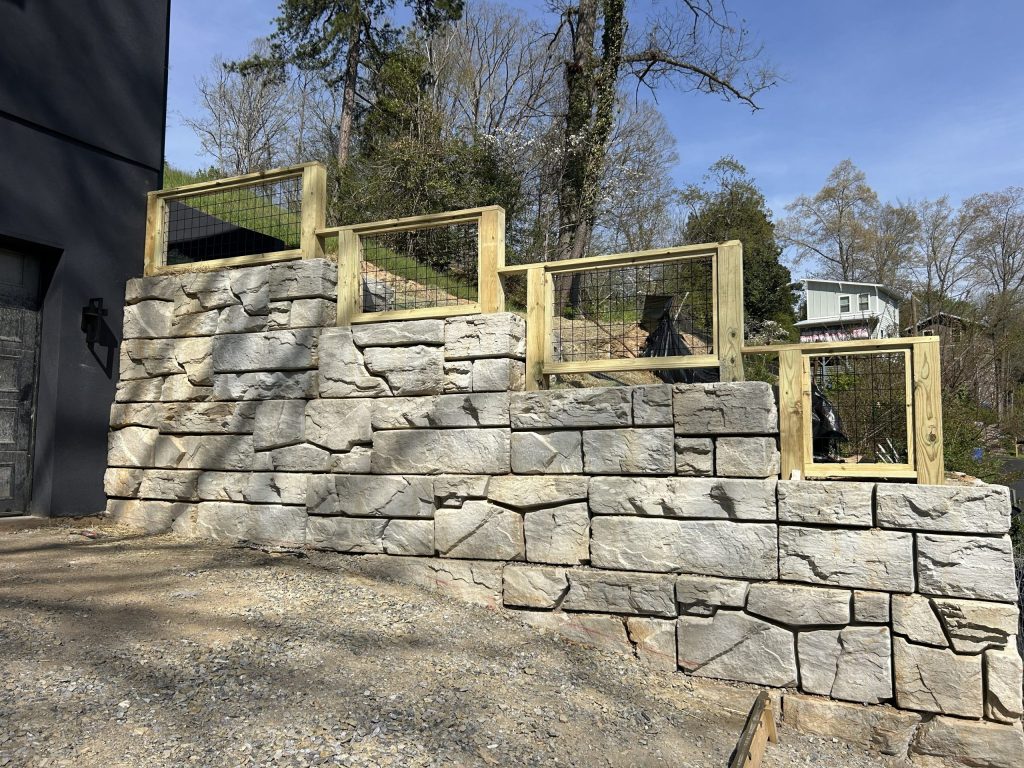
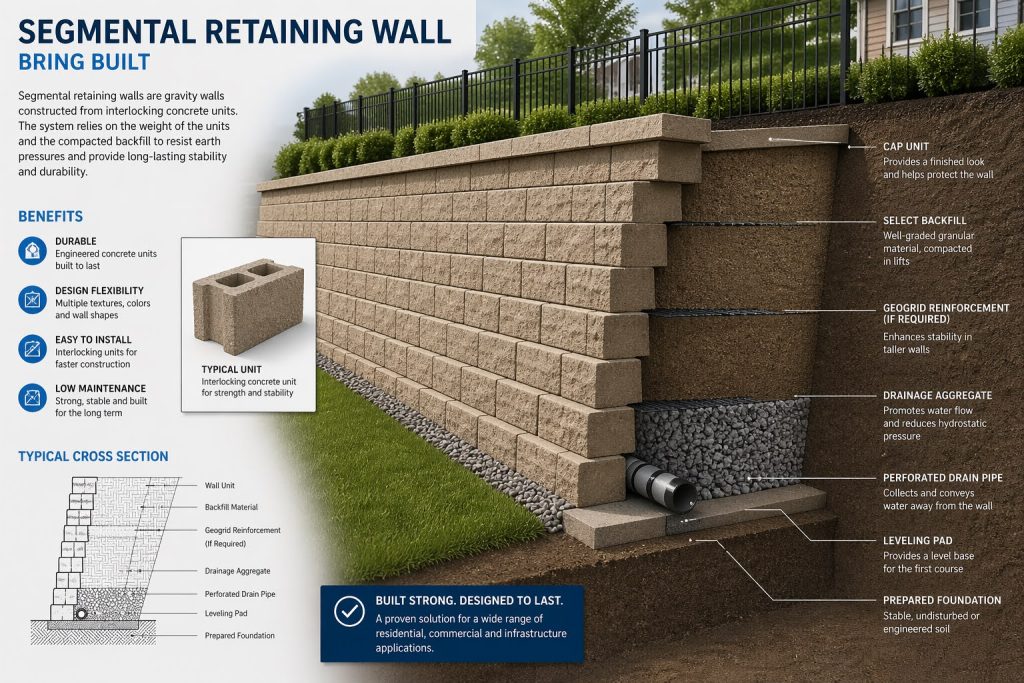

Gravity walls rely on the mass and backward lean of the block units to resist lateral earth pressure. Appropriate for walls up to approximately four feet on level grade. No geogrid required. Common applications include garden walls, low terraces, and property boundary transitions.
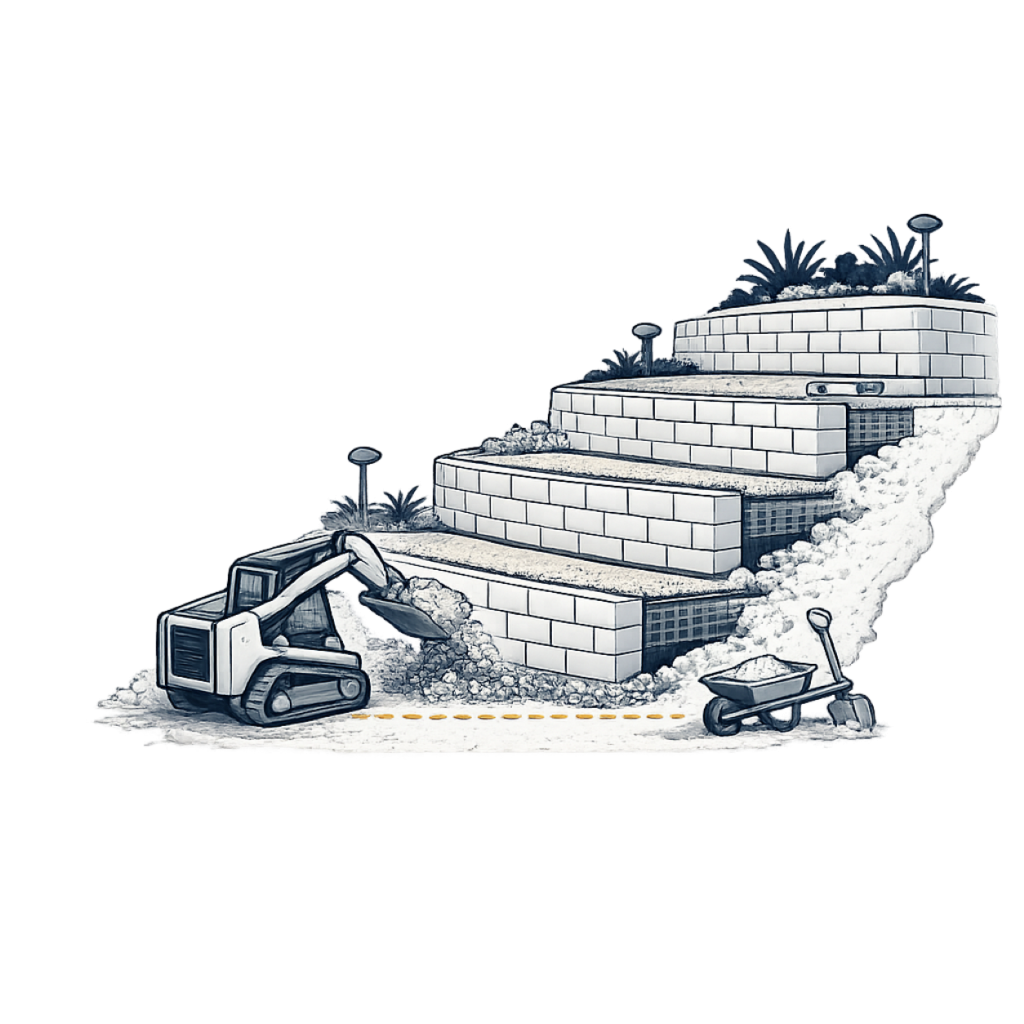
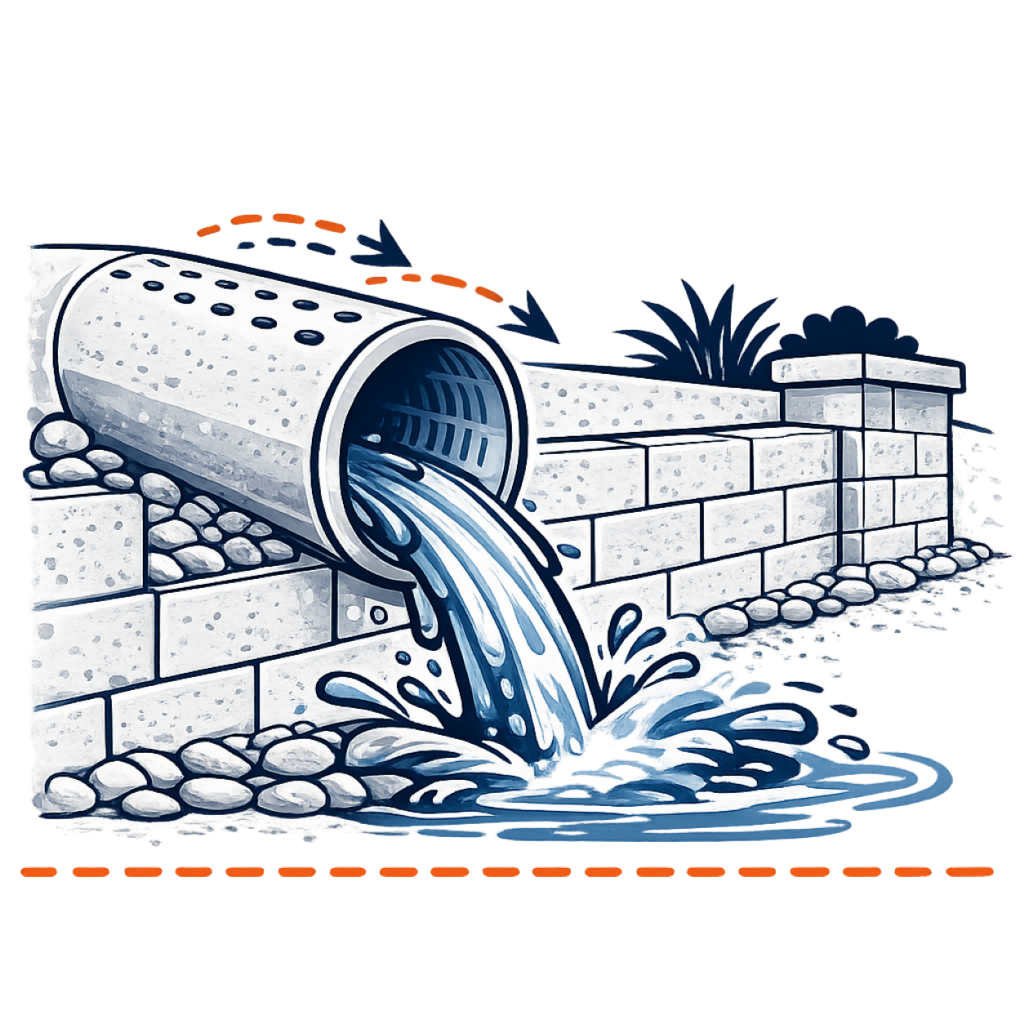
Hydrostatic pressure is the leading cause of retaining wall failure. Atlas integrates drainage into every segmental wall installation: a crushed aggregate drainage column, perforated collection pipe at the base, and positive outlets at regular intervals.
STEP 1
Thorough evaluation of soil conditions, drainage needs, and site-specific requirements. Engineering is coordinated as needed for your location and wall height.
STEP 2
Proper excavation, compacted base, and geogrid placement tailored to local soil and climate demands.
STEP 3
Professional installation of segmental blocks with integrated drainage systems to manage hydrostatic pressure.
STEP 4
Backfill, grading, and final inspection to ensure performance and aesthetics.
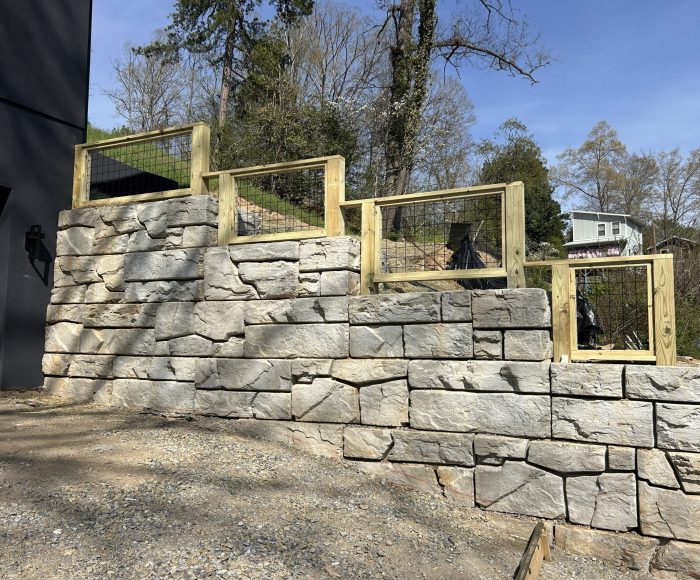
This process is adapted for local conditions across our service areas. See the full Atlas Process on our homepage.
garden walls, low terraces, and property-line transitions on level grade
most common residential solution; required for driveway, slope, or structure surcharge
larger residential hillsides and commercial sites with significant elevation change
engineered as a unified structural system, not independent walls; scope-driven
varies by wall height, jurisdiction, and whether a geotechnical report is required
scope-dependent; structural assessment required before any repair is quoted
Typical starting investment ranges shown above. Final project costs vary based on wall height, site access, drainage requirements, engineering, permitting, soil conditions, and overall project scope. Atlas provides detailed site-specific estimates after an evaluation.
A segmental retaining wall (SRW) is a modular earth-retention system built from interlocking dry-cast concrete blocks – no mortar required. The blocks interlock and are set with a slight backward lean (batter) to resist lateral earth pressure from the retained soil. For walls taller than roughly four feet, horizontal layers of geogrid reinforcement are embedded into the compacted backfill at engineered intervals, creating a mechanically stabilized earth (MSE) mass that acts as a unified structural system. The result is a wall capable of safely retaining twenty feet or more of elevation change when properly engineered. Atlas engineers each component – block units, base system, geogrid spacing, and drainage – to your specific site conditions.
A gravity wall relies on the mass and backward lean of the block units alone to resist lateral pressure. Appropriate for walls up to approximately four feet on level grade with no surcharge load. No geogrid is required. A geogrid-reinforced wall uses layers of high-strength synthetic grid embedded in compacted backfill to create an internal reinforced zone within the soil mass. The geogrid transfers tension through the soil and dramatically expands what the wall can safely retain – walls reinforced with geogrid can reach twenty to thirty feet or more. Any wall over four feet in height, or any wall subject to loads from driveways, structures, vehicles, or slopes above, requires a geogrid-reinforced design. Atlas specifies geogrid type, embedment depth, and spacing based on your soil, slope, and surcharge conditions.
Most residential segmental retaining wall projects in our markets range from $25 to $65 per square foot of wall face, installed. A simple gravity wall up to four feet tall on a level residential lot typically runs $8,000–$22,000 for a standard run. Geogrid-reinforced walls on sloped or surcharge-loaded sites start around $20,000 and scale with height, length, site access, and engineering complexity. Large tiered systems or commercial walls on constrained sites can exceed $100,000. Atlas provides itemized, written estimates after a site evaluation – we do not quote retaining walls by phone alone because soil conditions, slope, drainage requirements, and permitting costs all affect final pricing meaningfully.
Segmental retaining walls can be engineered to virtually any height when geogrid reinforcement, proper base preparation, and engineered drainage are incorporated. Walls of twenty to thirty feet are common on commercial sites and steep residential hillsides. Very tall single-face walls may require tiered setbacks based on code or slope stability requirements. In practice, most residential walls range from four to twelve feet. The practical limit is determined by your site geometry, available reinforcement zone width, local seismic requirements (especially relevant in Southern California), and engineering – not by the block system itself.
In most jurisdictions, yes. Walls over four feet in total height (measured from bottom of footing to top of wall) typically require a building permit and engineering review. In parts of San Diego County, that threshold drops to three feet. In Pittsburgh, significant grading associated with wall construction often requires a separate grading permit in addition to the building permit. Walls supporting surcharge loads – driveways, structures, vehicles – may require engineering review regardless of height. Atlas manages permit applications across all four of our markets and coordinates with local building departments on your behalf. Skipping permits on retaining walls creates title issues and liability at resale – we do not recommend it.
Have additional questions about segmental retaining walls, materials, local permitting, or installation? Visit our Retaining Wall FAQ for detailed answers.
Atlas Retaining Walls provides free site evaluations for residential and commercial segmental wall projects across all four markets. Our local specialists assess your site conditions, walk through design and material options, and provide a detailed written estimate – no obligation.