Coming to a city near you

Engineering San Diego’s Most Durable Retaining Walls

Built for Seismic Stability & Canyon Slope Solutions

We design and build permitted, structural retaining walls that stabilize slopes, manage drainage, and last decades. Certified expertise with San Diego’s unique Friars Formation clay and local code requirements.

Our Retaining Wall Services

Atlas provides installation, repair, replacement, and engineering across retaining wall systems.

segmental-retaining-walls

Segmental Retaining Wall Systems

Engineered block retaining wall systems designed for structural performance, drainage integration, and long-term durability.

slope-stabilization

Slope Stabilization

Engineered solutions to stabilize slopes, prevent soil movement, and protect structures from erosion and failure.

drainage-and-erosion-control

Drainage & Erosion Control

Integrated drainage systems designed to manage water flow, reduce hydrostatic pressure, and prevent erosion.

commercial-retaining-walls

Commercial Retaining Walls

Heavy-duty retaining wall systems for commercial sites, roadways, and large-scale structural support projects.

San Diego Building Codes: The "3-Foot Rule" & Beyond

Navigating the San Diego Development Services Department (DSD) or the County’s Land Development Manual is the most complex part of any project. In San Diego, height is measured from the bottom of the footing to the top of the wall, meaning a wall that looks “short” may still trigger a permit.

Wall Scenario Permit Status Engineering Level
Under 3 Feet Generally No* Standard Foundations
3' to 6' High YES Standard Structural Plans
Over 6' High YES Geotech + Structural Report
Surcharge Load YES Mandatory Engineering Review

*Note: "Surcharge" includes walls supporting driveways, pools, or slopes steeper than 2:1.

Engineered for San Diego’s "Adobe" Clay & Seismic Activity

San Diego topography presents two primary structural threats: Expansive Soils and Seismic Zones. Generic “handyman” walls fail here because they lack the sub-surface intelligence required for Southern California geology.

Managing "Friars Formation" & Otay Clays

San Diego topography presents two primary structural threats: Expansive Soils and Seismic Zones. Generic “handyman” walls fail here because they lack the sub-surface intelligence required for Southern California geology.

Hydrostatic Pressure Control

We replace native clay backfill with a “gravel chimney” of clean, angular stone.

Industrial Drainage

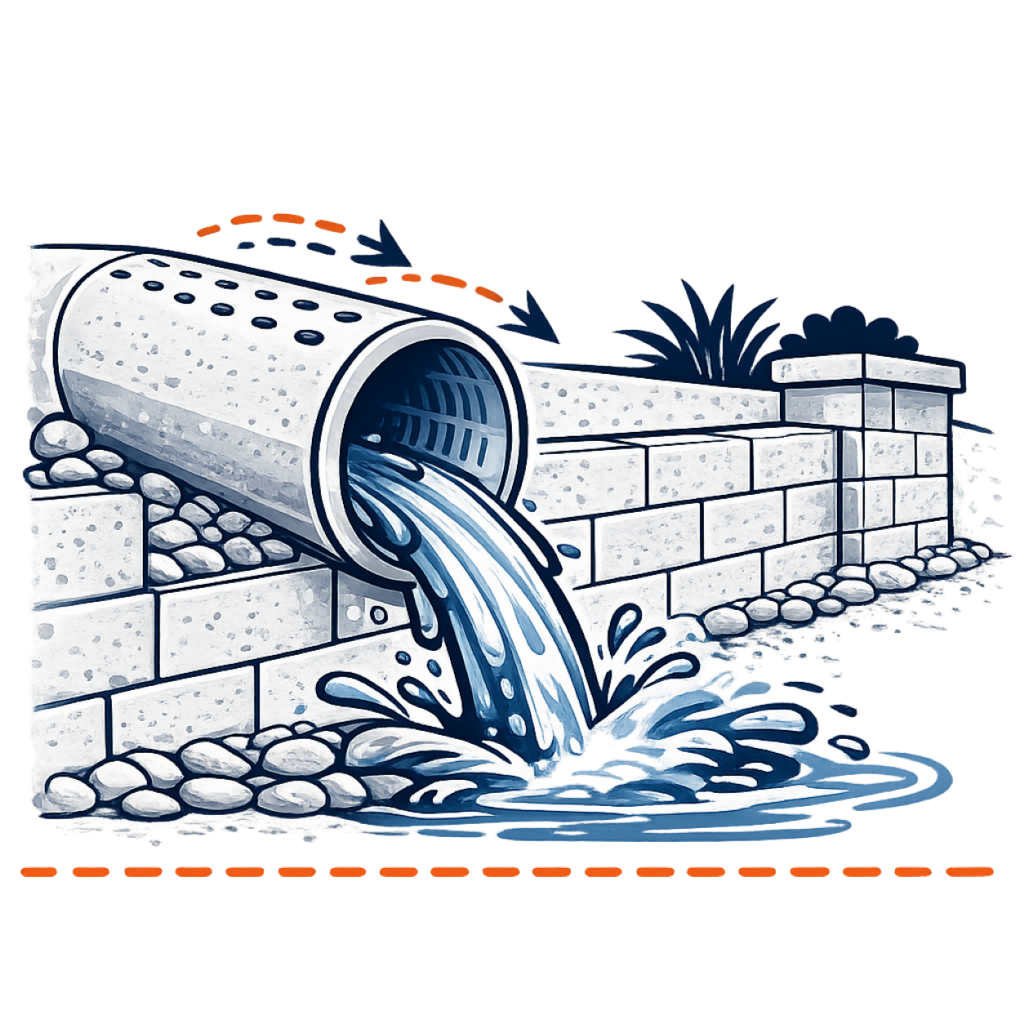
We install Schedule 40 perforated drainage pipes, not the thin corrugated “sock” pipes that collapse under the weight of wet soil or clog with silt during San Diego’s atmospheric river events.

Seismic-Flex & Geogrid Reinforcement

San Diego sits between major fault lines. A rigid, mortared wall is brittle and prone to cracking during tremors. We utilize Segmental Retaining Walls (SRW) like Versa-Lok for their inherent “controlled flexibility.”

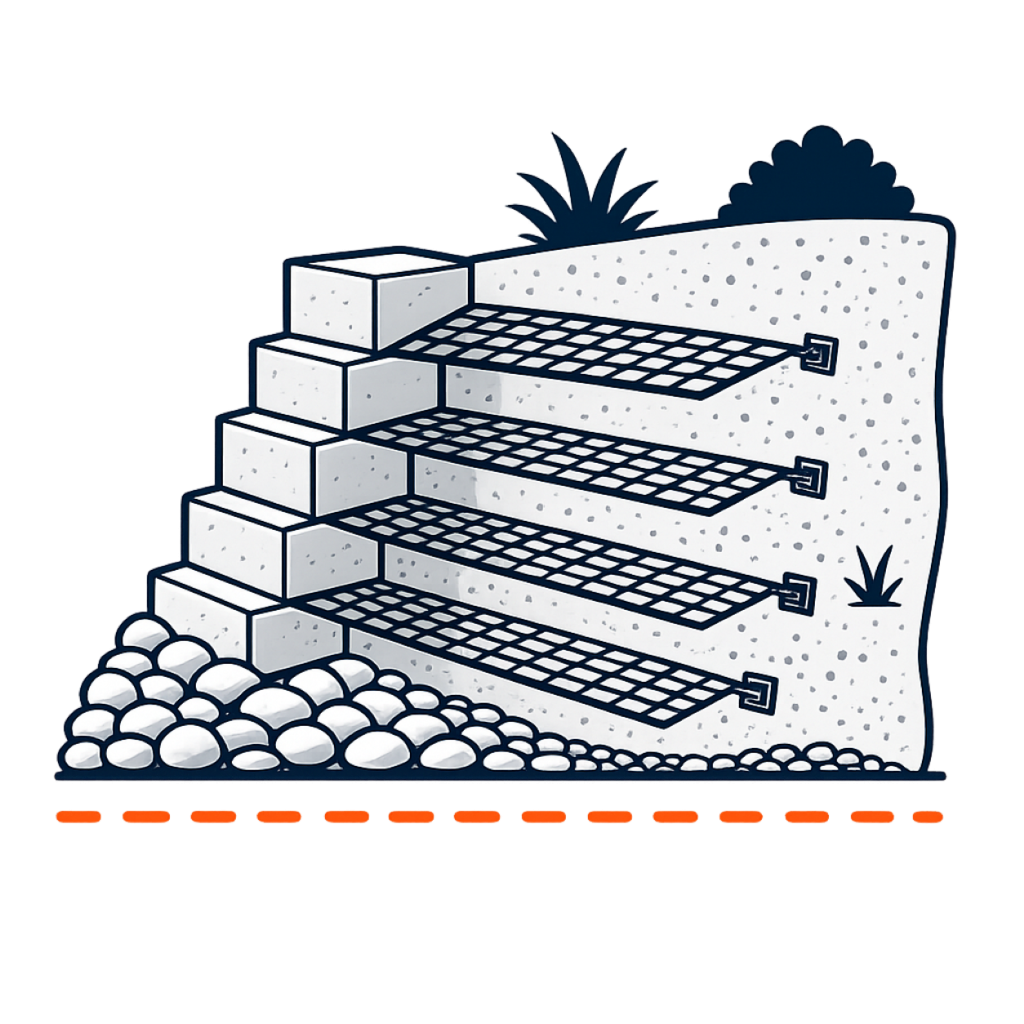
The "Reinforced Earth" Mass

For walls over 4 feet or canyon-side repairs, we integrate bi-axial geogrid layers. These synthetic grids extend several feet into the backfill, pinning the wall into the hillside. This turns the soil itself into a singular, reinforced structural mass capable of withstanding seismic shifts.

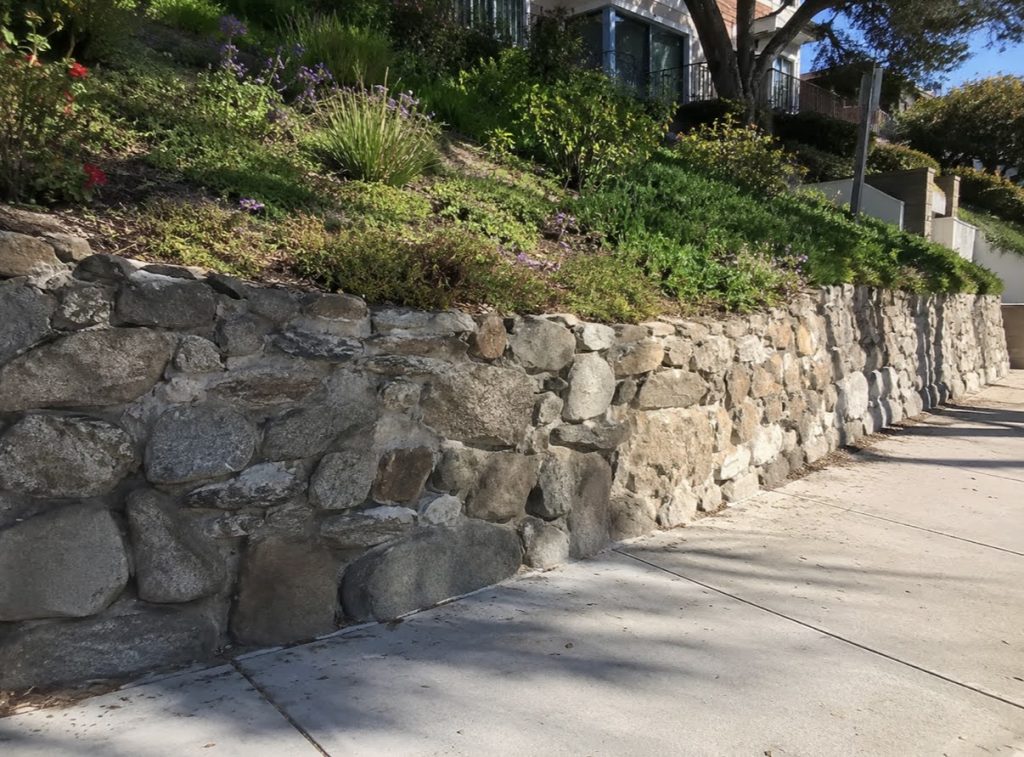
Curved natural stone retaining wall in residential backyard landscape.
Hillside retaining wall San Diego CA
Retaining Wall Backyard Installation San Diego
Curved natural stone retaining wall in residential backyard landscape.
Terraced retaining wall with stairs Orange County CA
Commercial Retaining wall installation Orange County CA

Hillside Property Expansion: Reclaiming San Diego Canyons

Many San Diego homes are built on hillsides where “usable yard” is at a premium. We specialize in the complex engineering required to turn steep slopes into functional living spaces.

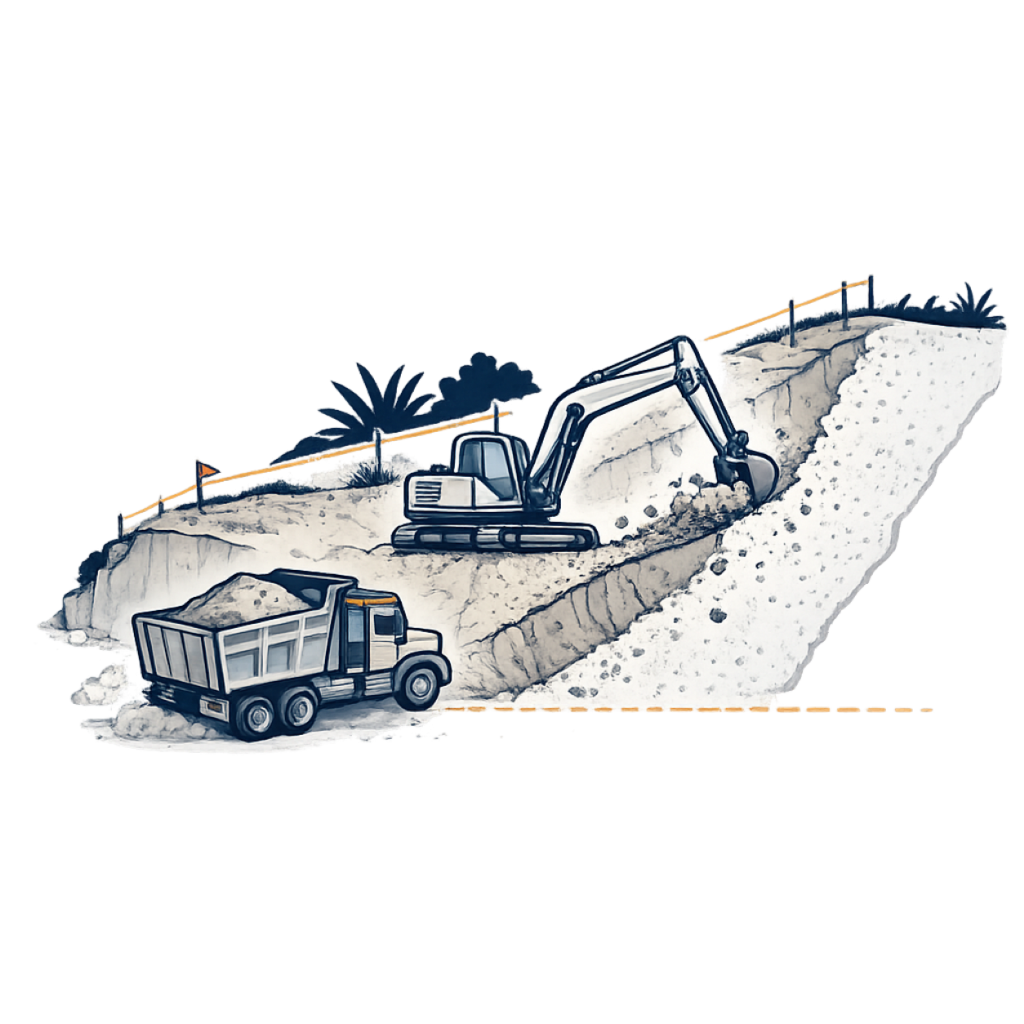
Hillside Cutting (Up-Slope)

We create level pads for ADUs, outdoor kitchens, or lawns by safely excavating into the hillside. This requires precise calculation of the "active soil pressure" to ensure the new wall can hold the weight of the remaining slope.
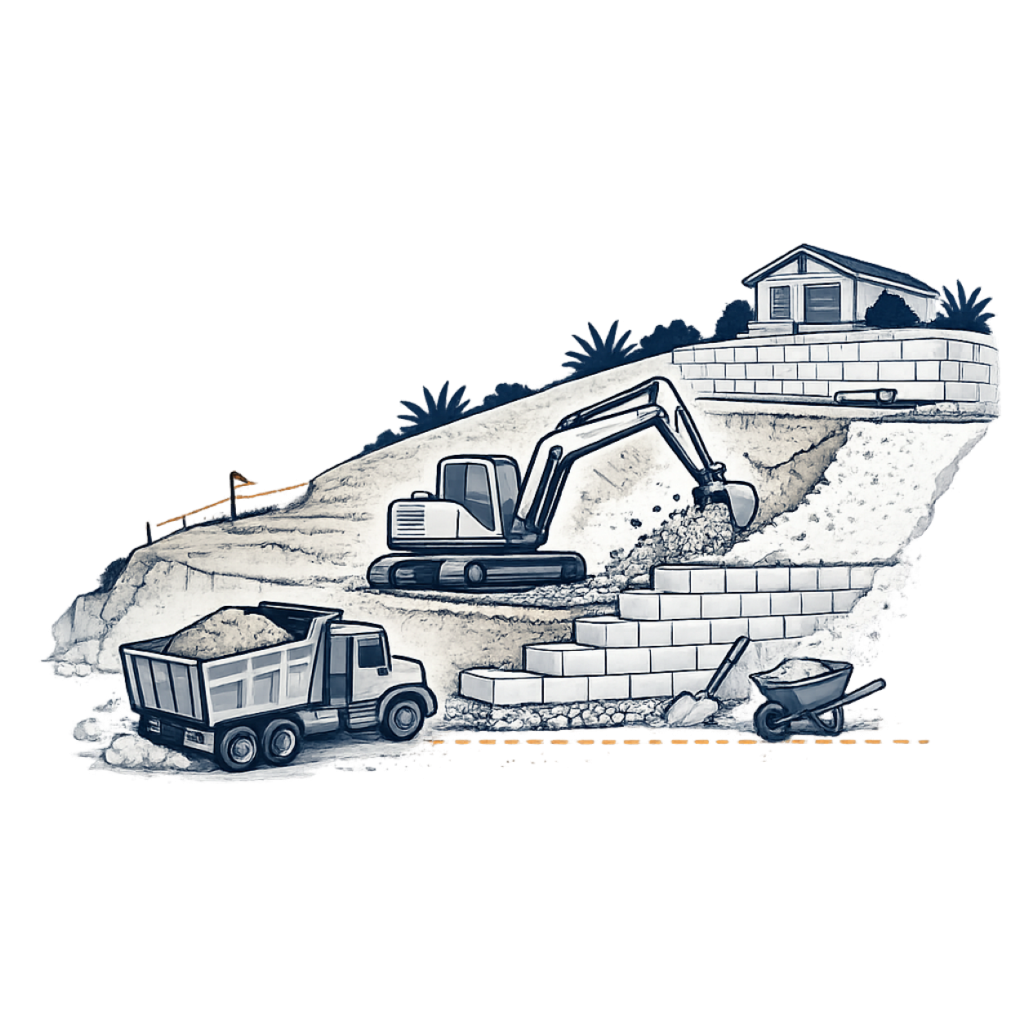
Building Out (Down-Slope)

On properties where the backyard slopes away, we build at the lower edge. In cases of poor soil bearing capacity, we utilize drilled caissons (concrete piers) to anchor the foundation into stable bedrock.
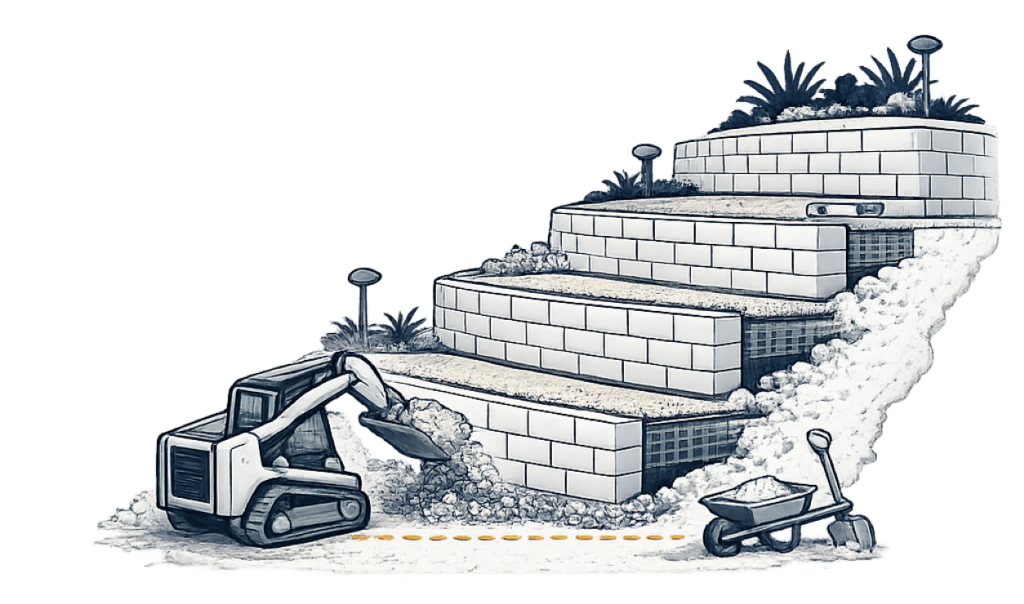
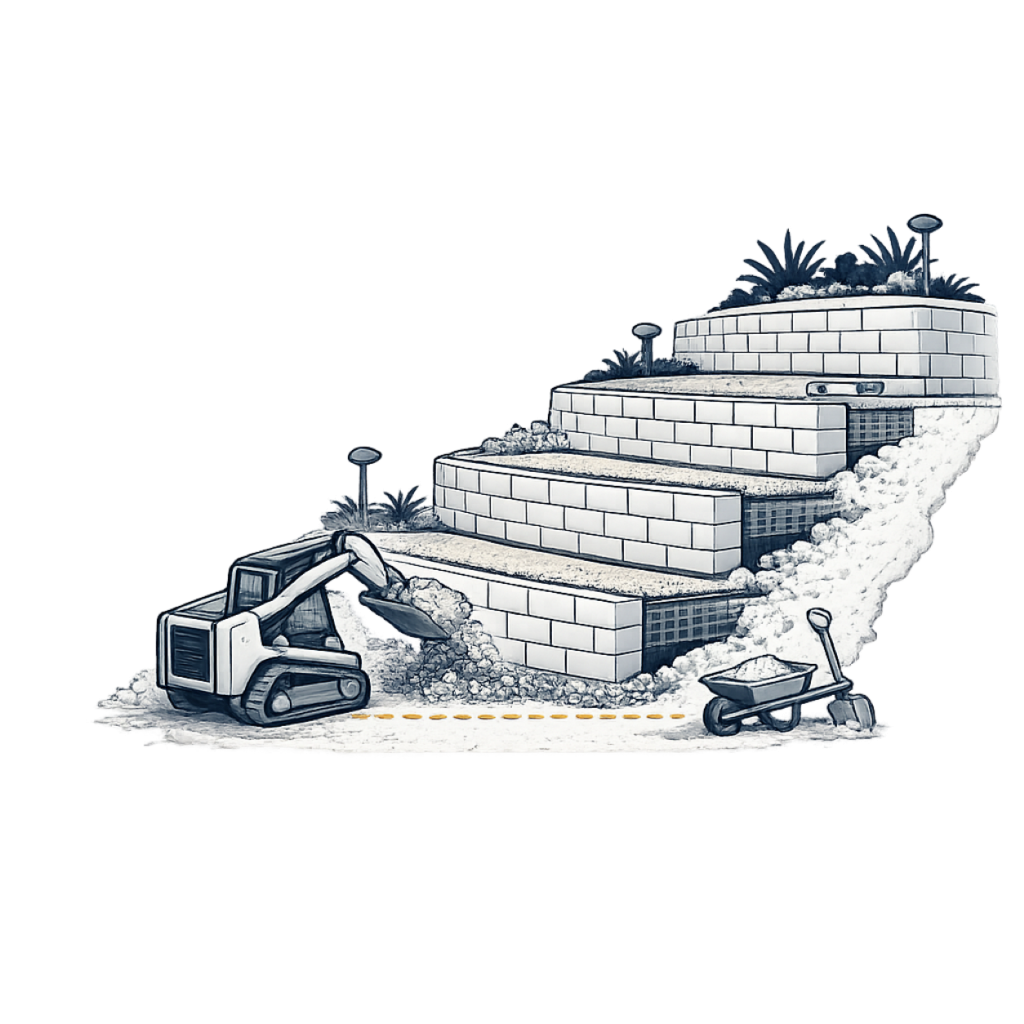
Multi-Tier Terracing:

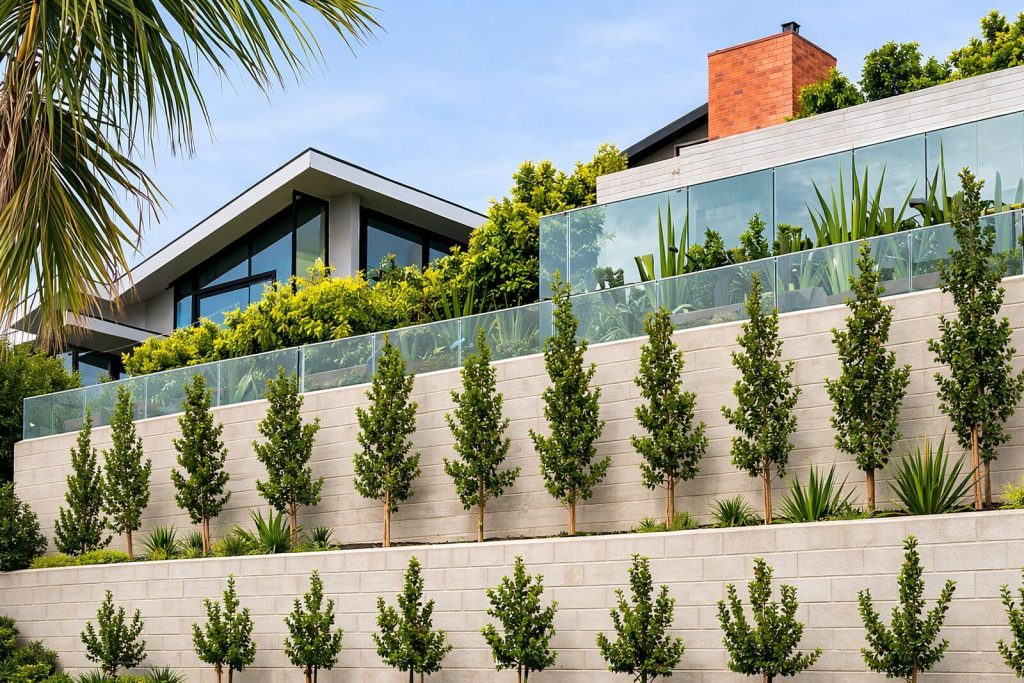
Instead of one massive, imposing wall, we often design "tiered" systems. This manages water runoff more effectively and integrates seamlessly with drought-tolerant landscaping.

Coastal Exposure & Environmental Factors

San Diego’s coastal zones (La Jolla, Del Mar, Encinitas) require more than just structural strength. We prioritize corrosion resistance and specific regulatory compliance for Marine Environments.

resistant

Corrosion Resistance

Salt air and marine layer moisture can degrade standard masonry over time. We select high-density, low-absorption blocks specifically rated for coastal environments.

ocean seal

Coastal Commission Complaince

Projects within the coastal overlay zone often require additional environmental review. We coordinate with local planners to ensure erosion control measures meet San Diego’s strict environmental standards

What Property Owners Are Saying

Frequently Asked Questions - San Diego

Why do so many retaining walls fail in San Diego?

It is rarely a failure of the block; it is almost always a failure of the drainage. Without a gravel backfill and functional weep holes, the “Adobe” clay expands when wet and pushes the wall over.

We strongly advise against wood. Between subterranean termites and the high fire risk in San Diego’s canyon-adjacent zones, masonry is the only material that meets 2026 durability and insurance standards.

If your wall is over 6 feet, or if you are building on a steep hillside with “documented” unstable soils, the City of San Diego will likely require a geotech report to ensure the global stability of the slope.

Projects We Recently Completed

Let's talk retaining walls.

Get help with your retaining wall project.

Our Virtual Assistant can handle most things and is available 24/7, or you can log in to manage your account.

Give us a call.

Drop us a line and let’s connect.

Mon – Fri: 7:30 AM – 10:00 PM ET
Sat: 8:30 AM – 8:00 PM ET
Sun: Closed

Send us a text.

Coastal Exposure & Environmental Factors

San Diego’s coastal zones (La Jolla, Del Mar, Encinitas) require more than just structural strength. We prioritize corrosion resistance and specific regulatory compliance for Marine Environments.

resistant

Corrosion Resistance

Salt air and marine layer moisture can degrade standard masonry over time. We select high-density, low-absorption blocks specifically rated for coastal environments.

ocean seal

Coastal Commission Complaince

Projects within the coastal overlay zone often require additional environmental review. We coordinate with local planners to ensure erosion control measures meet San Diego’s strict environmental standards

Service Areas

Atlas Retaining Walls of San Diego provides engineered retaining wall solutions for the following high-priority regions:

  • San Diego (Engineered Site Stabilization)
  • La Jolla (Coastal Bluff & Structural Support)
  • Del Mar (Premium Grade Management)
  • Point Loma (Steep Slope Stabilization)
  • Poway (Large Residential Terracing)
  • Rancho Santa Fe (Estate Grade & Drainage)
  • Carlsbad (Structural Segmental Walls)
  • Encinitas (Erosion Control Systems)
  • Carmel Valley (New Development Grading)
  • Chula Vista (Master-Planned Infrastructure)

Our San Diego installations prioritize specific soil-pressure calculations and coastal-grade drainage to prevent long-term shifting.

Frequently Asked Questions - San Diego

Do retaining walls in San Diego need to meet seismic requirements?

Yes. Retaining walls in San Diego must be engineered to withstand seismic activity, particularly on slopes, canyon edges, and hillside properties throughout communities like La Jolla, Rancho Bernardo, El Cajon, and Mission Hills. Walls over 3 feet often require a licensed structural engineer’s stamp to meet California Building Code (CBC) seismic standards.

Yes. Hillside retaining wall construction in San Diego is subject to city and county regulations, including permits, grading approvals, and engineering reviews. Projects in canyon rim areas or coastal bluff zones often face additional scrutiny from the City of San Diego Development Services Department.

Most retaining walls over 4 feet in height (measured from the bottom of the footing) require a building permit from the City of San Diego or San Diego County. Walls near property lines, on slopes, or with surcharge loads typically require engineered drawings and inspections. We handle the permitting process for our clients from start to finish.

Segmental retaining wall blocks, poured concrete, and engineered geogrid-reinforced systems are the most durable choices for San Diego’s coastal and canyon conditions. These materials resist moisture intrusion, soil expansion, and the salt-air corrosion common near the Pacific Coast and Mission Bay areas.

Even in San Diego’s semi-arid climate, proper drainage is critical. Irrigation runoff, winter rain events, and hillside groundwater can cause hydrostatic pressure that destroys improperly drained walls. Atlas retaining walls include gravel backfill, perforated drain pipe, and weep holes engineered to your specific site conditions.

Most residential retaining wall projects in San Diego take 3 to 10 business days to complete depending on length, height, access, and permit requirements. Larger hillside or tiered wall systems may take 2 – 4 weeks. Permit processing time – typically 2 to 6 weeks through the City or County – is separate and should be planned ahead.

 Retaining wall costs in San Diego typically range from $40 to $100+ per square face foot, depending on materials, wall height, site access, and whether engineering is required. A standard 20-foot segmental block wall may run $8,000 – $18,000, while large hillside or engineered systems can exceed $50,000. Atlas provides free, no-obligation estimates tailored to your property.

The most common causes of retaining wall failure in San Diego include poor drainage, inadequate footing depth, soil erosion, and the use of undersized or improper materials for the site conditions. Seismic activity can also compromise walls that weren’t originally engineered to code. Regular inspection and proper initial construction are the best defenses against premature wall failure.

Regional Considerations for San Diego

Pittsburgh retaining walls frost depth icon showing 36-inch frost line requirement with thermometer and snowflake to prevent frost heave

Managing Friars Formation Clay

San Diego is known for highly expansive “Friars Formation” clay. Our walls utilize imported granular backfill to prevent the soil from pushing against the wall as it expands and contracts.
Pittsburgh retaining wall foundation depth icon illustrating proper base preparation and depth considerations for wall stability in Pennsylvania soils

Canyon Rim & Slope Security

For homes on San Diego’s iconic canyon edges, we prioritize deep-set foundations and engineered tie-backs to stabilize the rim and protect your usable property.
Western Pennsylvania clay soil icon for retaining walls showing moisture retention and expansion risks with shovel and water droplets emphasizing need for drainage

Coastal Salt-Air Durability

In coastal communities like La Jolla and Del Mar, we use corrosion-resistant materials and high-density concrete blocks that withstand salt-air exposure without degrading.
atlas-retaining-walls-drainage-perforated-pipe

Seismic & Drainage Integration

Even in a dry climate, San Diego’s sudden rain events can cause “hydrostatic shock.” Our systems integrate industrial-grade drainage chimneys and seismic geogrid to manage water and movement simultaneously.
Curved natural stone retaining wall in residential backyard landscape.
1
Step 1
2
Step 2
3
Last Page

GET A FREE QUOTE

What kind of project is this? *
What is your relationship to this property? *

Have you been awarded this project? *
What are your payment terms? *

What service can we help you with?

Total Length (FT) *
Height (FT) *
What type of wall?
Details (Size, Type of Job, Etc.) *