Coming To A City Near You

Drainage & Erosion Control Systems | Preventing Retaining Wall & Slope Failure

Atlas Retaining Walls designs and installs comprehensive drainage and erosion control systems for residential and commercial properties in San Diego, Los Angeles, Orange County, and Pittsburgh. Proper drainage is a structural requirement — not an optional upgrade. Hydrostatic pressure from poor drainage is the leading cause of retaining wall failure.

Serving

San Diego, Los Angeles, Orange County & Pittsburgh Metro Areas

Our Services

Integrated drainage systems, erosion control, and slope protection solutions.

Project Types

Standalone drainage repairs, new retaining wall projects, slope stabilization, and full-site grading.

Get an Assessment

No-obligation consultation with our local team.

Why Drainage Is The Foundation Of Every Retaining Wall

Water is the primary structural threat to any retaining wall system. When rainwater or irrigation saturates the soil behind a wall and cannot drain freely, it creates hydrostatic pressure – a lateral force pushing against the wall from the inside. Most residential retaining walls are not designed to withstand significant hydrostatic pressure. A wall that feels solid in dry conditions can lean, crack, or collapse after a sustained rain event if drainage is inadequate.

Proper drainage eliminates this threat by intercepting groundwater and surface infiltration behind the wall and routing it to a positive outlet before pressure can build. Every Atlas retaining wall system is designed with drainage as a structural component – not as an afterthought.

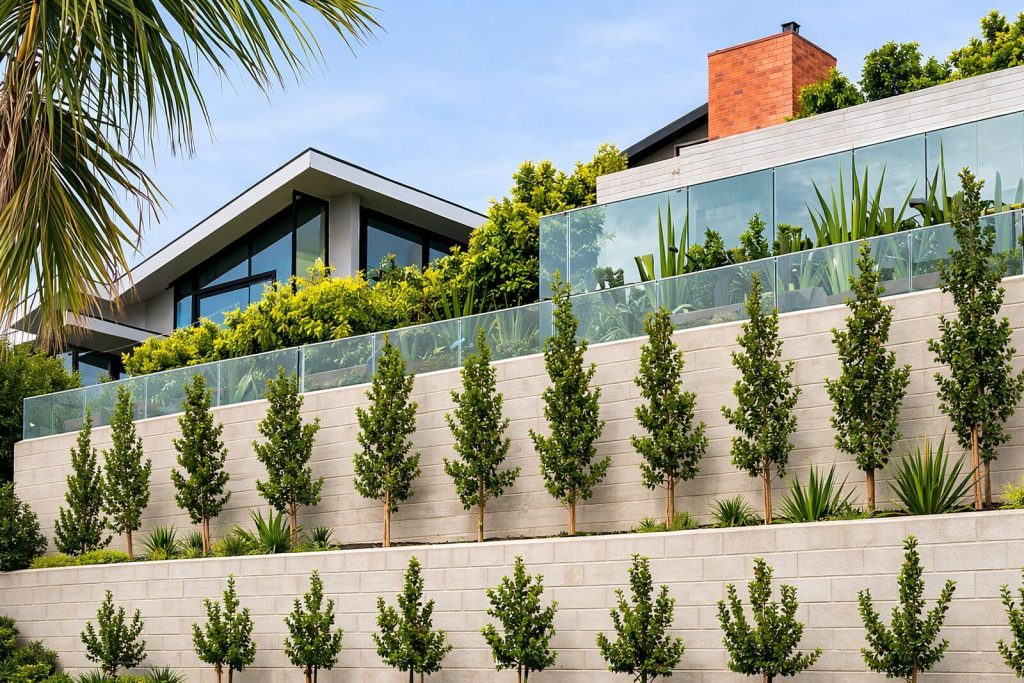
Segmental retaining wall supporting a landscaped hillside property

Drainage Systems for Retaining Walls

Granular Drainage Column

Clean crushed aggregate placed behind the wall face to allow water to move freely downward.

Perforated Drainage Pipe

4-inch HDPE pipe at the base of the drainage column, sloped to a positive outlet (we do not rely primarily on weep holes for walls over 4 feet).

Interceptor Drains & French Drains

Capture water from upslope before it reaches the wall - critical in San Diego canyons, Los Angeles hillsides, and Pittsburgh’s clay soils.

Erosion Control Solutions

drainage-and-erosion-control

Erosion Control Blankets (ECB)

Biodegradable or synthetic fiber mats staked to the slope surface to protect bare soil from raindrop impact and runoff erosion while vegetation establishes. ECBs reduce erosion rates by 90%+ compared to unprotected bare soil during the critical vegetation establishment period. Biodegradable options for most residential slopes; synthetic for steep or high-velocity applications.
slope-stabilization

Hydraulic Mulch & Hydroseeding

Hydraulic mulch with a tackifier is applied to slope faces in a slurry to protect soil and carry seed. Effective on large-area slopes where blanket installation is impractical. Seed mixes are specified for Southern California drought tolerance or Pennsylvania climate conditions depending on the market.
Experienced retaining wall construction team serving Pittsburgh PA

Articulated Concrete Block (Hard Armor)

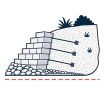
On slopes with high runoff velocity – channel banks, outlet areas, steep toe-of-slope zones – articulated concrete block provides hard armor protection against concentrated flow erosion. ACB systems interlock to remain stable under high velocity while allowing water to pass through the joints.
Experienced retaining wall construction team serving Pittsburgh PA

Outlet Protection & Energy Dissipation

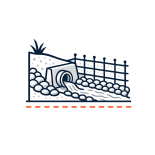
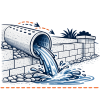
Where drainage outlets discharge onto a slope or into a channel, outlet protection prevents the discharged water from scouring a new erosion channel at the outlet. Atlas installs riprap aprons, concrete headwalls, or energy dissipater structures at all drainage outlets to slow discharge velocity and prevent scour.

Our Drainage & Erosion Control Process

STEP 1

Assessment & Design

We assess your property’s slope, drainage patterns, soil conditions, and long-term structural needs. Every retaining wall begins with a thoughtful plan designed for strength and stability.

STEP 2

Installation

Install aggregate columns, perforated pipe, interceptor drains, and outlet structures per engineered design.

STEP 3

Testing & Final Grade

Flush and test all systems, complete final grading, and walk through maintenance requirements.

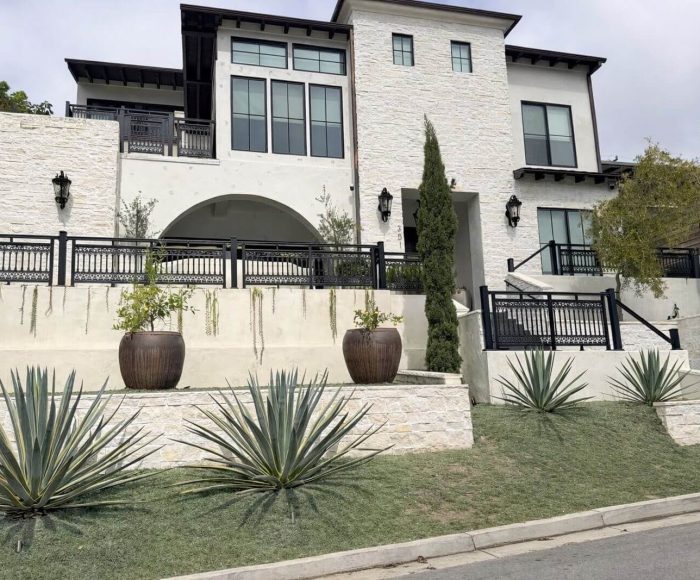
Modern residential retaining wall installation in Orange County

Learn more about the full Atlas Process on our homepage.

Frequently Asked Questions

What is hydrostatic pressure and why does it damage retaining walls?

Hydrostatic pressure is the lateral force exerted by saturated soil against a retaining wall face. Most residential retaining walls are designed for soil pressure only – the addition of hydrostatic pressure can exceed the wall’s structural capacity and cause leaning, cracking, or collapse. Proper drainage eliminates hydrostatic pressure by removing water before it can build up behind the wall.

If a retaining wall has a drainage problem, you’ll see signs that include water seeping through the wall after rain, white efflorescence, wall leaning/bulging, or wet soil at the base.
Yes, in many cases. Drainage improvements can be added by excavating behind the wall face, installing a perforated collection pipe and aggregate column, and establishing a positive outlet. Severely damaged walls may need to be reconstructed rather than retrofitted. Atlas evaluates wall condition before recommending this approach.
The most effective approach combines three elements: structural slope stabilization or retaining walls to manage elevation change, drainage improvements to route water away from the slope face rather than across it, and surface protection with erosion control blankets and drought-tolerant vegetation. Addressing only one element without the others rarely produces a durable result in SoCal’s dry-summer, wet-winter climate.
Pittsburgh’s freeze-thaw cycle – with frost depths to 36+ inches – requires drainage outlets protected from frost plugging. Clay-dominant soils have low permeability, requiring systems sized for saturation rather than soil infiltration. Combined sewer infrastructure in older neighborhoods may limit stormwater discharge options.

Service Areas

San Diego, CA - Canyon and hillside properties in La Jolla, Del Mar, Santee, Escondido, Chula Vista, and North County coastal and inland communities

Los Angeles, CA – Pacific Palisades, Bel Air, Laurel Canyon, Glassell Park, Pasadena, Arcadia, and hillside neighborhoods throughout the LA Basin

Orange County, CA – Newport Beach, Laguna Hills, Mission Viejo, Coto de Caza, Rancho Santa Margarita, Dana Point, and San Clemente

Pittsburgh, PA – North Hills, South Hills, Fox Chapel, Squirrel Hill, Mount Washington, and the riverfront communities throughout Allegheny County

Get a Drainage Assessment for Your Property

If you have standing water, erosion, or a retaining wall showing signs of hydrostatic pressure, Atlas can identify the issue and design a permanent solution.
1
Step 1
2
Step 2
3
Last Page

GET A FREE ESTIMATE

What kind of project is this? *
What is your relationship to this property? *

Have you been awarded this project? *
What are your payment terms? *

What service can we help you with?

Total Length (FT) *
Height (FT) *
What type of wall?
What location is closest to you? *
Details (Timeline, Installation or Replacement Specifics, Material Preferences, Etc.) *