Coming to a city near you

Slope Stabilization | Engineering, Reinforcement & Drainage Solutions


Atlas Retaining Walls provides engineered slope stabilization for residential and commercial properties in San Diego, Los Angeles, Orange County, and Pittsburgh. Unstable slopes cause soil erosion, foundation movement, property damage, and loss of usable land. Every Atlas slope stabilization project is engineered to your specific terrain, soil type, groundwater conditions, and local seismic or freeze-thaw environment.

We identify the failure mechanism – whether active erosion, shallow sliding, or deep-seated global instability – and engineer a permanent structural solution that addresses the root cause.

Serving San Diego | Los Angeles | Orange County | Pittsburgh

Residential & Commercial Slope Work

Residential & Commercial Slope Work

Free Site Evaluations - No Obligation

Understanding Slope Failure - Why Slopes Move

A slope fails when the forces driving soil movement exceed the forces resisting it. Most residential and commercial slope failures fall into one of three categories:
 

  • Surficial erosion: Water strips topsoil from unprotected slope faces. Common on newly graded slopes or slopes with disturbed vegetation. Accelerates to shallow sliding if unaddressed.


  • Shallow planar sliding: A block of soil slides along a failure plane near the surface, typically after heavy rain or irrigation saturation. Frequent on manufactured fill slopes in Southern California and on steep cut slopes in Pittsburgh’s hillside neighborhoods.


  • Deep-seated rotational failure: A large soil mass rotates along a curved failure plane. The most structurally serious failure mode. Requires geotechnical analysis and structural retaining wall systems – not just surface erosion control. Common on high slopes underlain by expansive or weak clay soils.

 
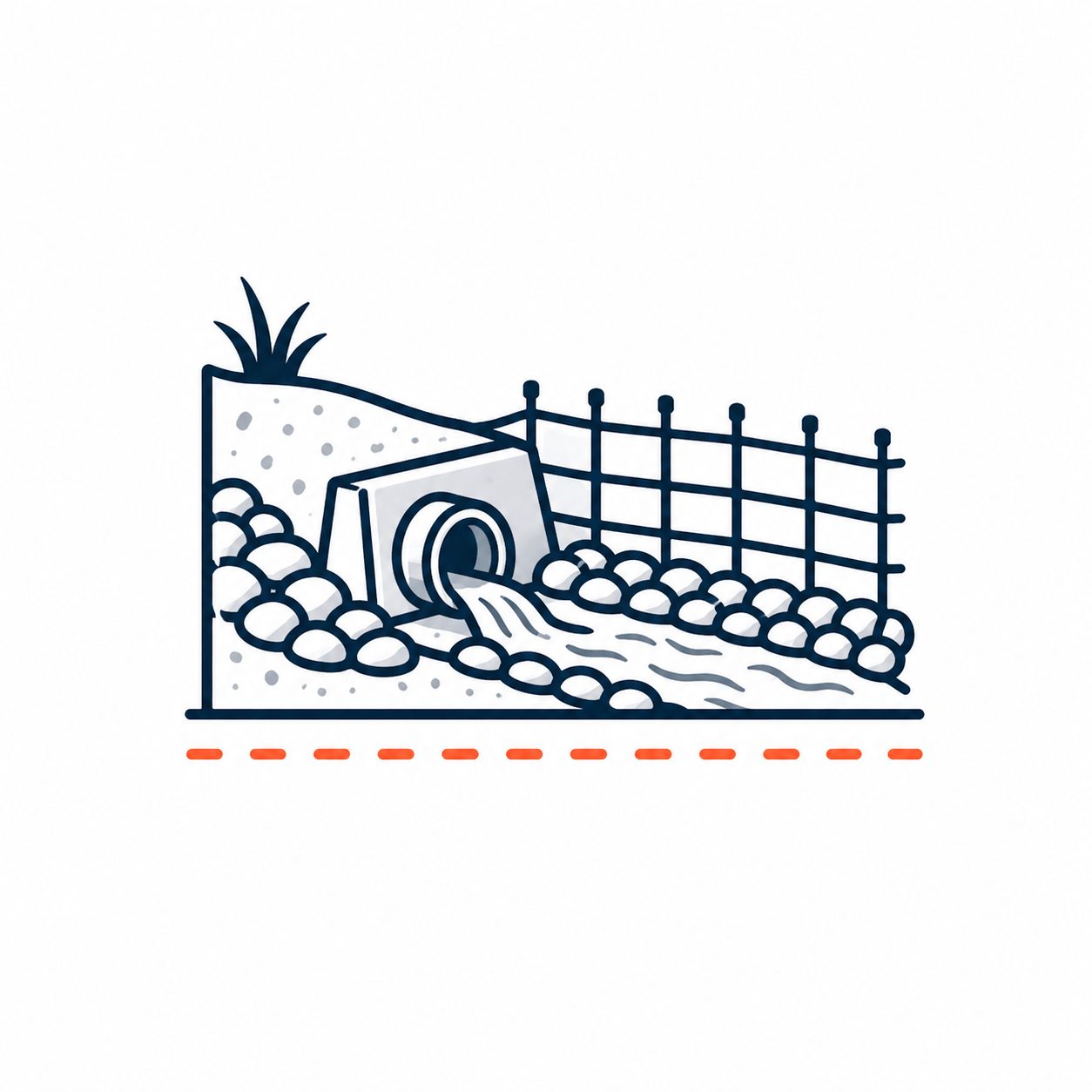
Correctly identifying the failure mechanism is the first step. Atlas assesses your slope before proposing any solution. See our drainage solutions for how we manage water as part of every stabilization project.

Curved natural stone retaining wall in residential backyard landscape.

Slope Stabilization Methods

Reinforced Retaining Walls

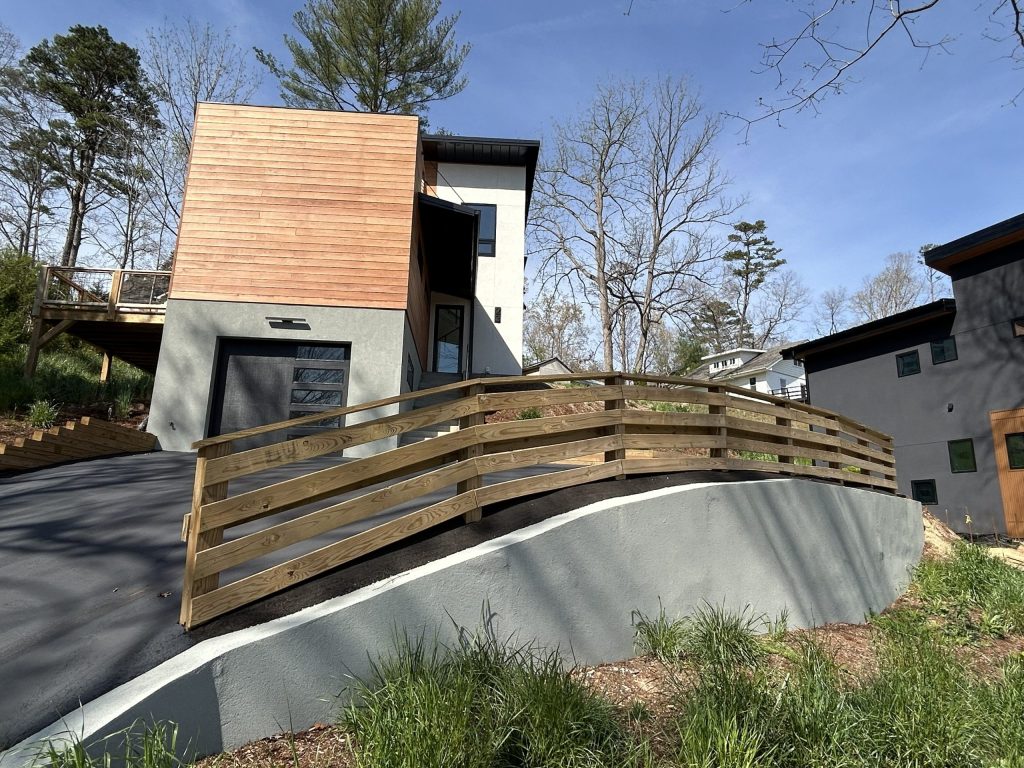
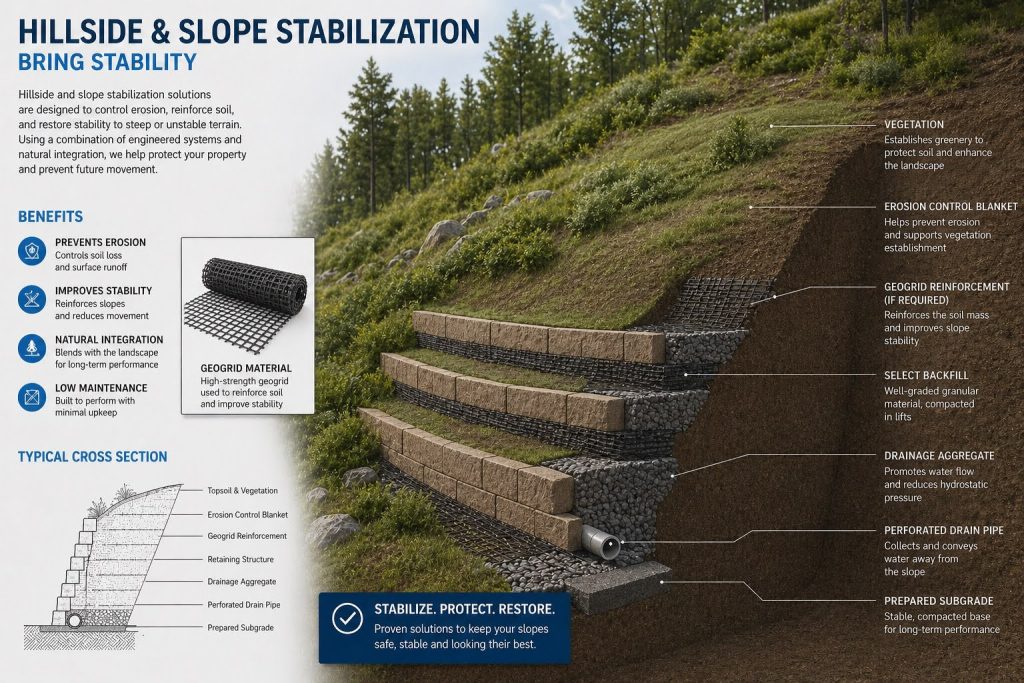
For slopes with significant elevation change or where usable land must be recaptured from an unstable grade, a geogrid-reinforced segmental retaining wall or tiered wall system is the most effective long-term solution. The wall intercepts lateral earth pressure, the geogrid stabilizes the retained soil mass, and integrated drainage controls hydrostatic pressure.

Geogrid Slope Reinforcement

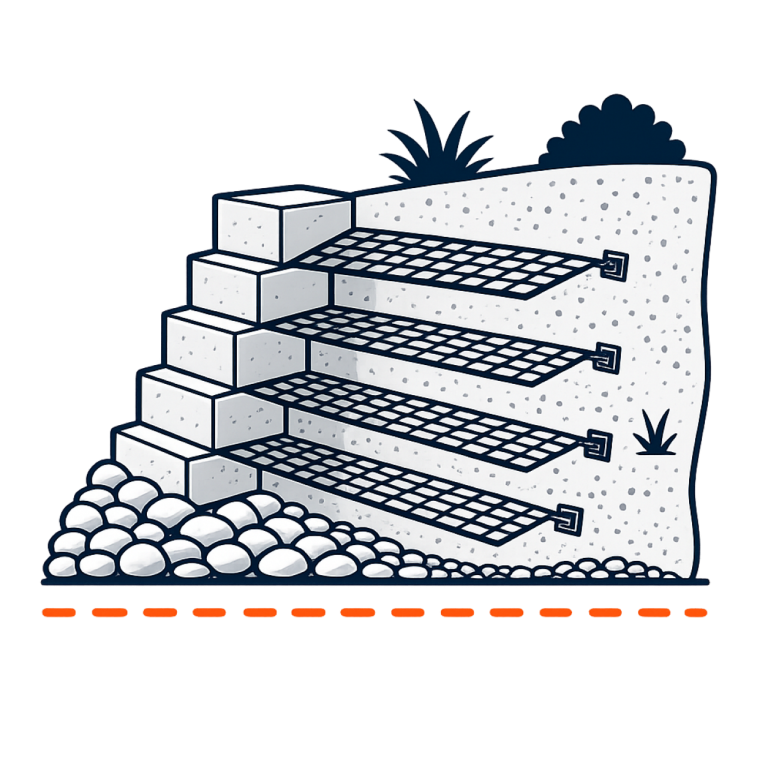
On slopes where a wall face is not required, geogrid layers can be embedded horizontally within the slope itself to increase internal friction and resist planar sliding. The slope face is then protected with vegetated cover or erosion control blankets. Effective on fill slopes and commercial grading projects.
Soil Nail Walls

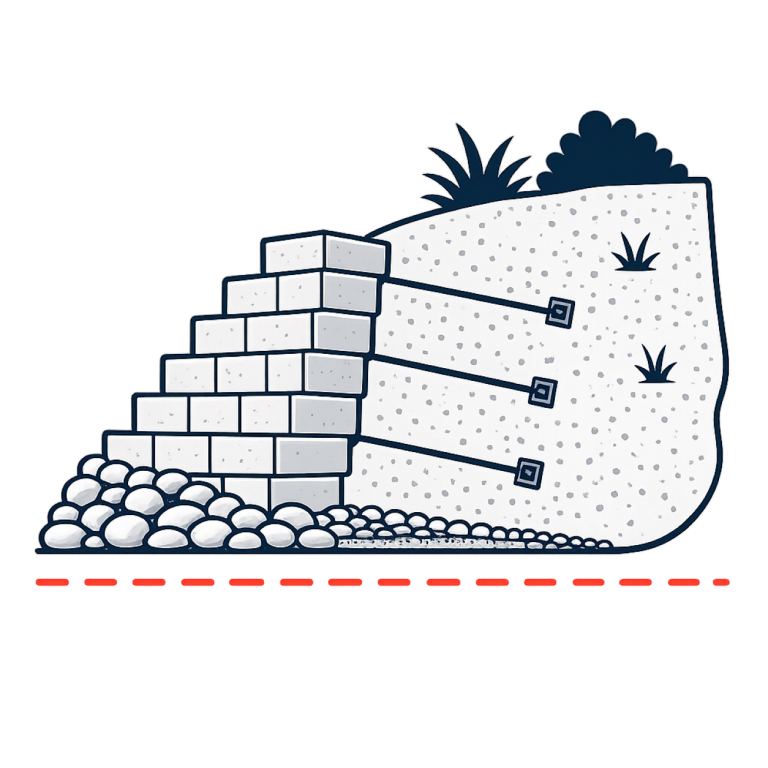
Soil nails are grouted steel bars drilled into the slope face at a downward angle, transferring tension through the soil mass to resist sliding. A shotcrete or cast-in-place concrete facing is applied over wire mesh. Effective on steep cut slopes and urban sites with limited excavation room - common in Pittsburgh's hillside neighborhoods and LA County hillside developments.

Erosion Control & Surface Protection

For slopes where deep structural intervention is not required, erosion control blankets, hydraulic mulch, and articulated concrete block protect the slope surface and promote vegetative reestablishment. Most effective when paired with drainage improvements.
The Atlas Slope Stabilization Process

Reinforced segmental retaining wall installation

STEP 1

Site Assessment & Engineering

Our specialists evaluate slope geometry, soil type, drainage patterns, and visible signs of movement before anything else. We will not propose a solution until we understand what is causing the instability. From there, Atlas prepares stamped engineering plans and manages all permit applications and agency coordination on your behalf.

STEP 2

Site Preparation & Drainage

Existing vegetation, debris, and failed soil material is removed. Drainage improvements are installed first - intercepting and routing water away from the slope before any structural elements are placed. Temporary erosion protection is installed to keep exposed areas stable during construction.

STEP 3

Structural Installation

Depending on the selected method, we construct reinforced retaining walls from the base up, install geogrid slope reinforcement in compacted lifts, or drill and grout soil nails with pullout testing before facing installation. All work follows the stamped engineering plans and is available for required municipal inspections.

STEP 4

Surface Protection & Final Grade

The stabilized slope face is protected with erosion control blanket, vegetative seeding, or hard armor as specified. Final grading directs surface water to collection points. All required inspections are completed before project closeout.

Slope Stabilization Cost Guide

Atlas provides itemized estimates after a site evaluation. We do not quote slope stabilization projects from a phone call alone – the failure mechanism determines the solution and the solution determines the cost.

Frequently Asked Questions

What are the signs that my slope is unstable?

Visible cracking or bulging of an existing retaining wall, soil creep, trees or fence posts leaning downhill, cracks in the ground surface parallel to the slope, loss of topsoil after rain events, and soft or wet areas at the toe of a slope. Any of these signs warrant a professional structural assessment.

 Costs vary widely based on slope height, access, failure mechanism, and the method required. Surface erosion control may cost $3,000–$12,000. A reinforced retaining wall system can range from $25,000 to $150,000 or more for large or complex projects. Atlas provides itemized estimates after a site evaluation.

Yes. Slope stabilization is one of the most common applications in San Diego, Los Angeles, and Orange County due to manufactured fill slopes, seismic activity, and concentrated wet-season rainfall. Seismic design is incorporated into every structural system in SoCal markets.

Pittsburgh’s hillside neighborhoods are underlain predominantly by clay-rich soils with low shear strength and high plasticity. Combined with steep slopes and freeze-thaw cycling to 36+ inch frost depth, Pittsburgh clay soils require explicit geotechnical analysis, robust drainage design, and deeper foundation systems than most other markets.

In most cases, yes. Any retaining wall over four feet (or three feet in parts of San Diego) requires a building permit. Significant grading typically requires a grading permit. Atlas handles all permit applications across all four markets.

Get a Slope Stabilization Assessment

If your slope is showing signs of movement, erosion, or instability, the right time to act is before failure occurs – not after. Atlas provides free site evaluations for residential and commercial slope stabilization projects. Our specialists assess your slope, identify the failure mechanism, and outline a structural solution engineered for your site.